
My earliest memories of The Cars stem from 10th grade chemistry class, shortly after their debut album, when the New York radio stations following Boston’s lead in giving heavy airplay to this synth-heavy, bouncy sound that we now think of as “First Wave” or the interstitial musical plane between classic rock and grunge. Denny the Dude, the distilled essence of teen cool who sat in front of me in Chemistry, had tickets to a smaller NYC venue and asked if I knew of them. Right angles to the natural flow: As an underclassman, a band nerd, and still not having attended a concert in NYC, I was hardly the arbiter of pop. But I suggested he go because I liked what I’d heard of their first album. Up there with “calling” the Dire Straits album “Love Over Gold,” it was my first taste of musical influence.
That feeling carried through my college and early Boston years. Billed as a Boston band, The Cars got as much love as hometown heroes Aerosmith, J.Geils and the Lyres. I loved that The Cars wrote anti-love songs with the same cynicism that guided their stage dress — not punk, not disco, not classic rock. Just The Cars. While Ric Ocasek got the attention as the angular front man, married to a supermodel, it was bassist Benjmain Orr’s lines that drew me in: are punchy, driving and powering the rhythm section in support of, or in opposition to, the synths and guitars. Orr’s vocals (especially on “Drive”) were a dominant term in The Cars equation, up there with Ocasek’s look and quirkiness.
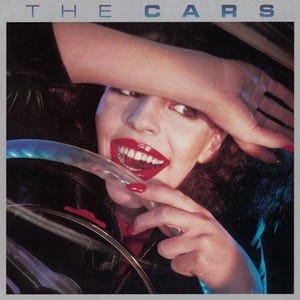
One of my favorite Cars songs is “Bye Bye Love” — a love song that’s not really a love song as much as a plaintive cry for something other than drama in a relationship. What Steely Dan memorialized in the marked-up photographs in “Peg,” The Cars reflect back on self-importance, self-impression and the late 1970s rock and roll life.
When I picked up the bass a dozen years ago, it was one of the first bass lines that I taught myself, thinking it was mostly pedaling on that “E” — it’s much harder than it sounds because Orr is creating space for the chorus with some simple lines, and he keeps an atomic clock beat going through the choruses. It’s not Geddy Lee complexity, but you can dance to it.
With all of that preface, I picked up what is the definitive book about Ben Orr, Joe Milliken’s “Let’s Go,” and got an encyclopedic education. Drummer-turned-guitarist-turned bassist, Cleveland native leading Boston’s first wave of new bands, and first generation American son of Polish and Czech parents who went from “Benny Eleven Letters” (Orzechowski) to a name sake of Boston’s hockey god. Culled from interviews with family members, band mates across forty years of music, and deeply researched in terms of the band membership and dynamics, Milliken’s book reads like a passionate Wikipedia entry for Ben Orr. While the details about group formation and dissolution, instrumentation, and recording activities are robust, there’s very little about what drove those dynamics. What emerges is a portrait of the anti-80s rock star: ego less, incredibly kind and generous, deeply talented and flexible, and yet with subsurface demons including alcohol, fractured relationships and eventually the break up of The Cars. There’s very little about the people side of Orr other than him being, well, a real people person. Milliken’s talent for research brings in an an entire front row of cameos, from WBCN’s Carter Allen to eventual Yes keyboardist Igor Khoroshev to Sherwood Schwartz, who produced “The Brady Bunch.” The Rat (the subject of more than a few pieces here) plays a major role, and brought multiple smiles to my face during two days of reading. It was a fun book that shed light on those right angle turns and the paths around the rock and roll corners.
9th grader here. From your title alone, I had Bye Bye Love playing from start to end in my head without even realizing it, such that reading the song name brought me up short. The chorus synced up perfectly.