
I make these lists public to try to build readership across multiple dimensions: For this newsletter, for the authors whose work I love, and for the sources from which I discover new avenues. Keeping with the “1,000 True Fans” theme, anything I can do to help deserving creators receive more exposure and small bumps in sales volumes is worth transcribing some notes.
As an Amazon Associate I earn from qualifying purchases. If you click through on a book link and buy something, I get a small commission.
“Creating Space” is a combination of free book, music and arts reviews, subscriber only technology and strategy insights and some paid-subscriber only content. Please consider becoming a subscriber, paid or free, so help build this community. Your comments, feedback and notes are much appreciated.
“Paris In The Present Tense,” Mark Helprin, fiction, finished July 8.
Following up on a Paris vacation with geo-fenced literature.
After a disappointing read in “London Falling,” I was determined to find a novel set in modern Paris that illuminated the city I had just visited. Helprin delivers in dense, woven prose that calls back to its own subplots and minor characters, to decades of French literature and to a milennium of Parisienne history. In facing down his own mortality and moral limits, our protagonist-cellist invokes bits of Thomas Mann’s “Death In Venice,” the bumbling Asterix and Obelix, and Jean-Paul Sartre who finds hell in the betrayal of friends. There is so much to like here: Paris as a lived-in and vibrant city; the life of a minor musician; how families deal with medical emergencies and life-changing wealth; the facades of that wealth and its stranger inner circles.“The Sixth Paper,” Jonathan Blank, historical fiction, finished July 12.
Recommended in the Princeton author list, and set in and around Princeton.
A Dan Brown-esque story about Einstein’s rumored “sixth paper” that predicted you could reverse E=mc2 and therefore corral a nuclear explosion. The story unfolds as a layered spy vs spy vs international cabal with some thinly veiled conflicting interests. The protagonist — a Rutgers physics professor who gained notoreity for his first book on Einstein — seems incapable of probing overly strange coincidences; the author borrows heavily from both Grateful Dead and hedge fund cultures and gets both somewhat wrong (The Dead never played Metlife Stadium as it didn’t exist when Jerry was alive; those famous shows were at Giants Stadium and well chronicled by Dean Budnick). There’s a major plot line and betrayal that isn’t resolved. It goes on my list of “Princeton related” books, but without an asterisk.“Audition,” Katie Kitamura, fiction, finished July 13.
Another Princeton author, finalist for Pulitzer, recommended by Barak Obama.
A melange of stagecraft, performance, interpretation and family dynamics. I absolutely adored this book for its language and descriptive power; Kitamura describes the artistic process using only words in ways that would require sight and sound for most artists. She examines destructive forces, transformation, and how they are detected and conveyed in an overlay of two stories that may or may not be the same, seen through different performative lenses.“Sunward,” William Alexander, sci-fi, finished July 17.
Philip K Dick Award and Ursula K Le Guin Prize finalist.
Equal parts murder mystery, space opera and commentary on contemporary tunnel vision and tension between AI and carbon-based thinking, a delightful short book about family in the far future. I had been discussing Douglas Coupland’s “All Families Are Psychotic” with friends over dinner and found strange parallels between them.“Slow Gods,” Claire North, sci-fi, finished July 23.
Locus and Ursula K Le Guin Prize finalist.
I found myself thinking of “Ender’s Game” by the end of this one, but the story is deliciously nuanced and the world building powerful and complex. What happens when you create a monster - either through urban legend or actual circumstances - and have that man face down his own creation myth as well as the “deux ex machina” trope that pervades too much sci-fi? Wonderful commentary on current divisive politics, and North’s use of gender to convey increasing appeal as well as differentiate degrees of sentience (between carbon and silicon and other life forms) is as good as Ann Leckie’s.“Cool Machine,” Colson Whitehead, fiction, finished August 16.
Conclusion of the “Harlem Trilogy,” a series in which I loved every book.
If it is possible to channel Barry Ulanov and be the jazz writer for the current decade, then Colson Whitehead deserves the honor. His Harlem trilogy sends out soloists in the mid-tier criminal realm, pulling them back for three final shout choruses. The likable and deep-running protagonist Carney resolves all of the plot lines, neatly, with courage and chutzpah, and true honor among thieves. I simply adore Whitehead’s prose, as it’s a Miles Davis blues progression — that word may not belong, but it works and moves the narrative into a minor key. It’s unexpected and delightful and he captures the changing face and shape of New York City through the Reagan years as a precursor to today’s more pronounced shifts.“Don’t Be Evil,” Claire Stapleton, business, finished August 26.
Surfaced through several Substacks.
Completing the trilogy of exposé books about big tech companies (Susan Fowler’s “Whistleblower” and Sarah Wynn-Williams’s “Careless People”), Stapleton pulls the cover back on Google’s internal views of its culture, ethics and people management. I find these books run to about one third sincere views of employee experiences; one third portrayal of large enterprise behavior where middle management’s attempts to advance its career negatively impacts those in their organizations, and one third somewhat lacking awareness about their employers’ business models and growth strategies. In no way do I want to diminish or detract from actual hostile workplace events; Stapleton’s book hit several very loud chords that resonated with my own experiences over the last 25 years.“Let’s Go: Benjamin Orr and The Cars,” Joe Milliken, music, finished August 28
Discovered trolling Amazon for more music books.Full review here (published about a month ago):
Let’s Go: An Orangy Sky of Love Songs
·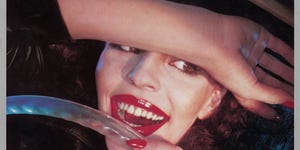
My earliest memories of The Cars stem from 10th grade chemistry class, shortly after their debut album, when the New York radio stations following Boston’s lead in giving heavy airplay to this synth-heavy, bouncy sound that we now think of as “First Wave” or the interstitial musical plane between classic rock and grunge. Denny the Dude, the distilled …
I had so much fun reading that it turned into a full-length article, although I did miss some of the salacious details of a truly rock and roll period in Boston.
“The Cars: Let The Stories Be Told,” Bill Janovitz, music, finished Sep 30.
Follow on to the Ben Orr bookYes, it took me a month to finish this, due to many days of not reading at all multiplied by the density of the book’s research. As Janovitz’s book unspooled into my brain, I was reminded of so many vignettes powered by The Cars’ music: a prom, auditioning albums at WPRB-FM, enjoying my first few years of adult life in Boston, and really exploring the tendrils of rock and roll bands. So many musicians that I admire show up in this book: Jeff Conolly of the Lyres, Adrian Belew, Roxy Music, Brad Delp (Boston) and others that powered my commute through Brighton and Cambridge in the 1980s. If Ric Ocasaek’s songs were anti-love songs, then The Cars were the anti-punk and anti-blues rock band; mixing synths and guitar riffs and short solos while simultaneously leveraging the explosion of MTV and music videos. They did what the Buggles sang about, repeatedly (before reverting to half of Yes), and indeed, Janovitz tells the stories.
