Rush at Fifty Something

In the last month, I’ve done something I feared I would never do again: I saw Rush with my son, filling a hockey arena with singing, joyful fans, and celebrating half a century of amazing music. When the R40 tour concluded in 2015, followed by dummer Neil Peart’s death, I was profoundly sad. That news compounded John Lennon’s death closing the door on the Beatles’ future and Willie Stargell’s death punctuating the last sentence inscribed around the City of Champions and facing the fact that I am, as a grandfather once said, in the “take away club” where the subtractions dominate events on your timeline.
And then, watching two 70-something rock stars play their hearts out, smile, laugh, joke, and equally cheer on and be propelled to the limelight’s edge by a drummer only slightly older than their tenth album, all of the sadness vaporizes in the reflection of a spotlight and 20,000 fans belting out “Bravado” as loudly and emotionally as they can.
My expectations for this tour were high, given the musical standards Alex Lifeson and Geddy Lee have historically set. I’ve endured digestive and mental disagreement seeing my favorite 70s and 80s prog bands tour into their fourth and fifth decades, with the exception of King Crimson, to whom I’ll return shortly. While we all are aged and weathered, they simply sound old: slower tempos, forgotten or simplified solos, and botched lyrics. Seeing Geoff Downes with Yes may have put me off of seeing Steve Howe again. Paul Simon was unable to hear himself or his band, musically sad and forlorn. If 72 is the new 27, it arrives with mobility assistance, a slower click track through the in-ears and finding only enough of the right notes to keep the first ten rows of heads nodding.
Rush took my expectations, wadded them up, and blasted them above the Jumbotron sixteen bars into “Xanadu:” Alex and Geddy playing their double neck, heavy guitars; Anika bringing all of the subtle percussion to the fore; all three of them having loud, raucous fun like a high school band with amps set up on cafeteria chairs.
Alex and Geddy openly discuss their physical preparation for the tour, from arthritis to digestive issues to giving up pot smoking in the Rolling Stone Canada interview. It’s an hour of required watching for fans.
Geddy is playing as hard as ever and his vocal range is more relaxed and improved compared to the last two tours. Alex is technically perfect and having fun on stage. Loren Gold on keyboards gives Geddy more time and space to roam the stage, a freedom he accents with his kicks and jumps that deny he’s in his early 70s. Anika is the perfect drummer to power the band: stroke level precision, more interaction with her bandmates, and keeping time at the original tempos. She is now the obvious joker in the band: taking a selfie in MSG, opening up the Toronto Star, or donning “The Bag” at the conclusion of three consecutive shows. Seeing her bandmates revel in her final flourishes drops an exclamation point at the end of a nearly three hour show. Anika hasn’t inherited Peart’s legacy as a fragile object; she’s picked up the parts and injected them with vital signs.
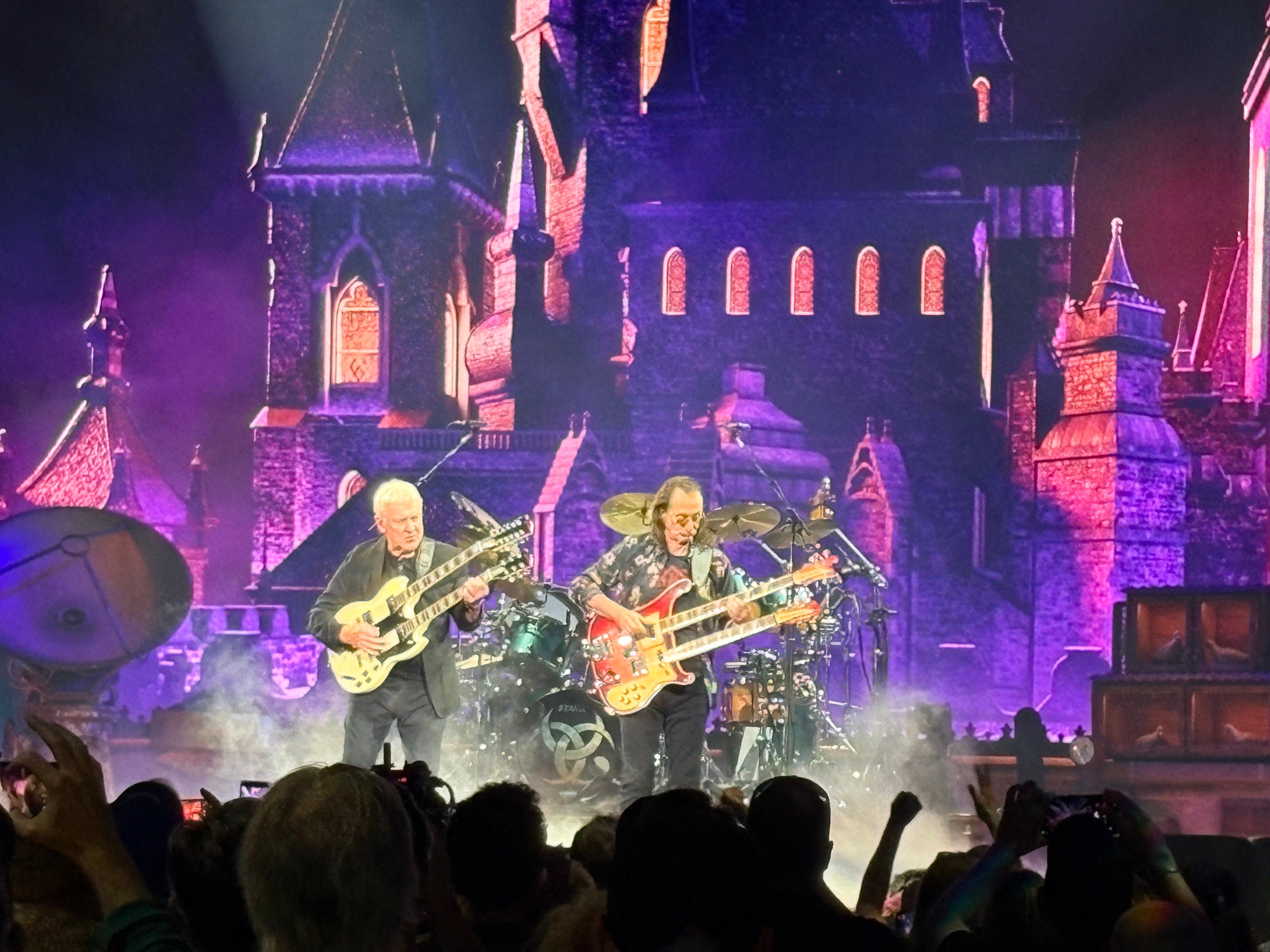
We caught a show in Chicago that rocked as much as the “Counterparts” or “Show of Hands” tours; but then the Toronto home game took things to a different level. The set lists are varied; there was a full mobile video team for what’s likely an upcoming release; the city was electric with fans mugging in front of the Ontario Legislative Building and the Hockey Hall of Fame. While the signage outside of the Hockey Hall says it’s the “Most Canadian Thing You’ll Do,” seeing Neil Peart’s snare from the “Hockey Night in Canada Theme,” then sipping Tim Horton’s in the HHOF Special Edition, while walking back to the Westin Harbour Castle (the tall building in the cover background of “A Farewell To Kings”) completes the hat trick of Rush immersion.

Leading into set break for the second Toronto show, Geddy said “These kids we play with are tired and need a rest.” Emotionally we needed the reset as much as anyone. Personally, I spent as much time watching Anika’s dance of the pedals, tom toms and cymbals as I did checking out how much force Geddy put on those bass strings.
Between Chicago and Toronto, I spent a week at “prog rock camp,” my annual retreat into the woods to learn from, play with and generally carouse with members of King Crimson, Stick Men, and fellow musicians. King Crimson is one of the few bands that continued to perform at a masterful level from the 70s through their final shows; each incarnation of the band had musicians who owned their parts but also gently interpreted the music. Nobody ever said King Crimson was denatured because Tony Levin picked up John Wetton’s bass lines on Chapman stick or Adrian Belew departed in later line ups.
For a few of the open rehearsal sessions, I parked myself behind Pat Mastelotto, drummer for King Crimson and Mr Mister. He is a master of odd and interleaving time signatures, electronic pads and samples, and hits with a ferocity that makes hammered brass fear him. I got a deeper appreciation for what it’s like to keep time: what you see over the battery’s horizon is the outward aspect, the occasional smile and cymbal hit with a quick ring dampening. Behind the kit you see the feet moving multiple pedals, the change in grips, the sticks placed on a floor tom to switch to mallets or adjust an electronic pad.
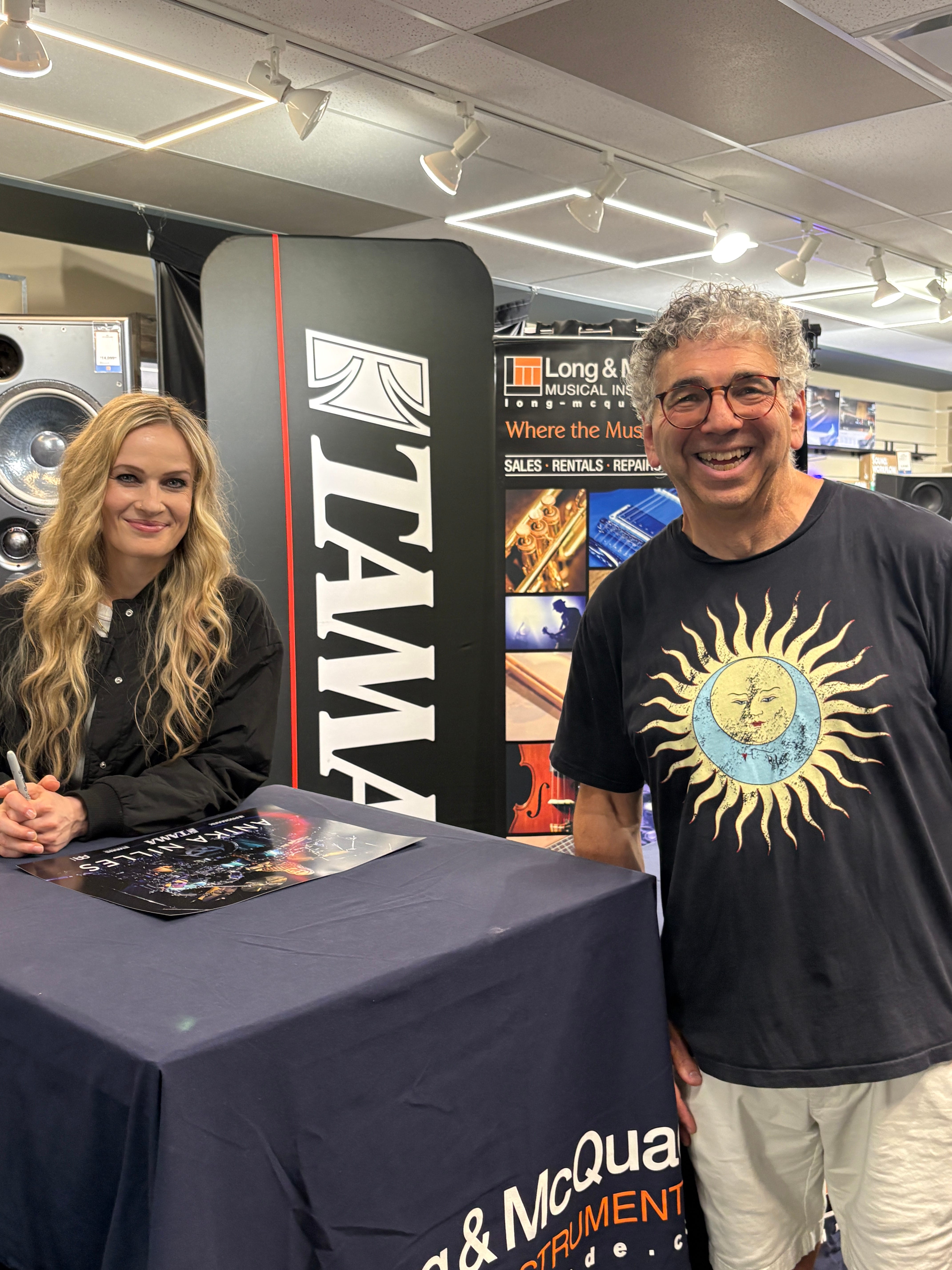
With that humbling experience, I have a different view of Anika on drums: she may miss a sixteenth note in a fill, or drop a bass drum beat early in 2112, but Neil Peart equally made fractional time mistakes (mostly chronicled in “Road Show”). Her active, aggressive, and well orchestrated ballet on the kit re-animates a small city of fans each night. Rush in its current lineup puts all of us in the limelight shining with a joy that had turned to only memory for a decade, and now reflects back into lived experience.
I wished that we could do it all again in 2015, and now it approaches the unreal.