
Forty-six years ago, on February 22, 1980, I fell in love with hockey watching the USA-Russia game, on tape delay, sitting on my TV room floor. New Jersey was still two years away from a team of our own, and my on-ice activities had been limited to figure skating lessons at a Pennsylvania winter resort. But that game opened up possibilities; two winters later I came home for winter break from Princeton with a pair of hockey skates, gloves and a stick I had been using to take hockey lessons as a phys ed requirement. My mom’s disapproval was subtle: “I guess you’re a hockey skater now?” As the son of a dentist, and completely lacking in physical ability of any kind, I didn’t see much as much of any kind of skater, but through intramurals and later beer league hockey I grew to love the sport.
Enough that I took my own kids ice skating when they were 3 and 5 years old, an afternoon that remains the single most expensive choice I have made in 35 years of parenting. From there, figure skating competitions, ice dancing, synchronized skating, and travel ice hockey were staples of every weekend from Labor Day until Easter.
One game from that first year of travel hockey stuck with me and resurfaced during this year’s Winter Olympics. In a “house league” game, where the roster rules are bit more relaxed and kids play for their local town, our son was skating as a fill-in player for a neighboring town against a very strong club. The final score was 5-1, with all five goals scored by a combination of Bobby Carpenter III (who was all of six years old and skated circles around everyone) and his sister Alex Carpenter. Their dad had recently retired as a NJ Devils player; those “in the know” knew we were seeing hockey lineage that was rare. Our son scored the lone opposing goal, on a breakaway, on a move that had one parent ask him (in the locker room) “Where did you learn that” to which he replied “I saw Patrik Elias do it.”
The kids all had, and have, their hockey heroes.
All of them were white men, perhaps with varying accents, but with very little non-geographic diversity. Hockey in the early 2000s was largely white, middle-class, expensive, and boys. Look at the actors in Disney’s “Miracle” and those are the golden hockey faces of the early part of this century.
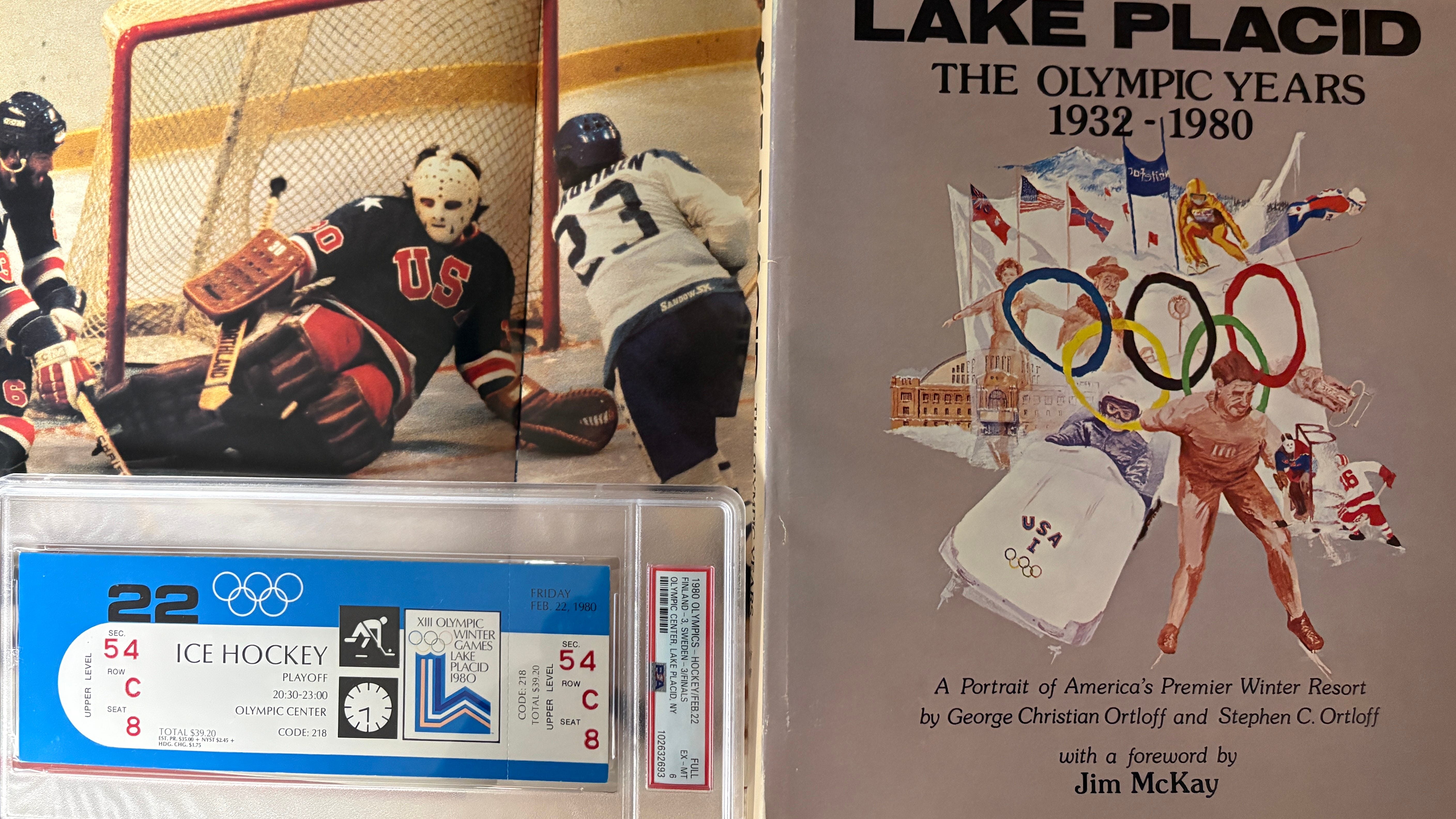
In those first few years of travel hockey, we found ourselves in Lake Placid for our annual end of season tournament. The place reverberates with hockey history, the way a sharp winter day amplifies sound reflecting off of snow and ice. I dove in headfirst, reading books about the first town dedicated to winter sports; the first to host two Winter Olympics; about the Russian teams that dominated the 1970s in international play and the 1980 USA men’s team.
About a dozen years sago, I began coaching Mites hockey - the same level where our son and the Carpenter kids faced off in a community rink. I’ve had players who I think will do well at the college level; one or two who might get drafted; and many who played because it was fun and social and rewarding. What I noticed most, however, was the changing face of hockey: kids of all colors and genders, many of them the first in their families to play ice hockey. Gone is the implied exclusivity, and the sport has delivered on the promise that “Hockey is for Everyone.”
I’ve coached a number of young girl players and all girls teams, and watching the USA Women’s team capture gold in Milan means that they now have their 1980 moment. It took almost two full generations, but those American young women with linked arms, swaying during the medal ceremony, are the projection of my mites teams singing songs on the bench because they’re having fun with a sport they love.
This past Sunday, before the medal game, I had my usual group of three early beginner players. We worked up to some stick and puck drills, practicing shooting the puck into the boards while I put on a show of being the world’s worst goalie (not really a show, more trying not to pivot and break another ankle). When one of the young players ended the pass and shoot drill by saying “that’s just like Dougie Hamilton” (NJ Devils defenseman, who takes a lot of one-timers on passes to the point), I smiled — he has picked out his hero. What I sincerely hope is that a few hours later, he had enormous pride in his country, his team and his sport, and that he and his future teammates funnel that into future years of playing — and cheering for — hockey at any level.
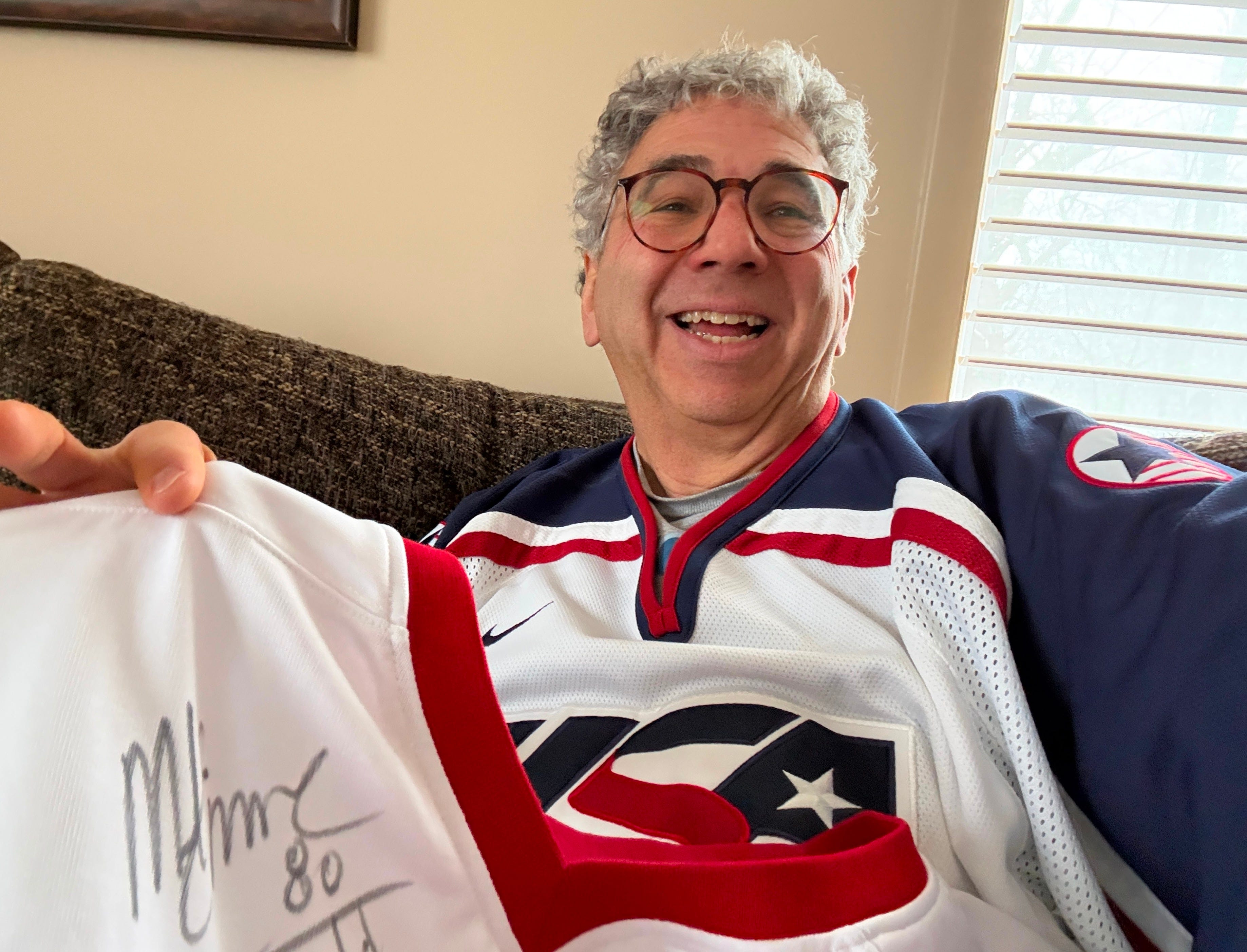
And so post-practice, I was sitting in my TV room, surrounded by talismans and rings on the TV, cheering for the underdog. I was wearing my USA Hockey jersey, purchased by my parents during our last trip to Lake Placid twenty years ago, perhaps the final acceptance of my defection to hockey skates twenty-five years earlier. My signed Mike Eruzione jersey was draped across my lap, channeling some of the 1980 Miracle on Ice passion. My son and I were texting comments on the game. I know my father, the retired dentist, winced when Jack Hughes spit his teeth out late in the 3rd period (“bloody chiclets” in hockey parlance; I don’t want to consider how many teeth end up in the Zamboni shavings each year).
And just a few minutes into overtime, Zach Werenski fed a pass right to Jack Hughes, who scored the gold medal winning goal, ending a drought that extended back to my high school years, to the Iran hostage crisis, to memories of the gas shortage, and to a much less diverse hockey base.
Yeah, I cried after that game. I loved seeing the USA men bring Johnny Gaudreau’s jersey and kids onto the ice, after having skated past the JG/MG memorial on our rink’s dasherboards two hours earlier. I thought of how happy my mom would have been to see the USA win both men’s and women’s gold, as she was a proponent of women’s sports from the days when girls basketball players were required to shoot underhanded. I thought of my learn to play skaters having a whole new roster of heroes, some of whom play at the other Essex County rink. I thought of my friend Wally, who still holds the Princeton University record for most saves in a game, sure he had equally been amazed at both mens and womens goalies for the USA teams. I smiled knowing that Alex Carpenter has a gold medal, 25 years after a rec league game that showed her future brilliance. I know that my son and daughter in law have a new hockey hero in their home — Aerin Frankel, home town goalie for the PWHL Boston Fleet and anchor of the USA women’s strong defense.
These are the new golden faces of hockey. And they shine so brightly.
"an afternoon that remains the single most expensive choice I have made in 35 years of parenting". Yep. Many a father will nod his head while reading that.